What 'Tested and Inspected Before Handover' Actually Means
Handover day is not the finish line. It is the point where every circuit has to prove itself before anyone else touches the building.
September 6, 2026 · 3 min read
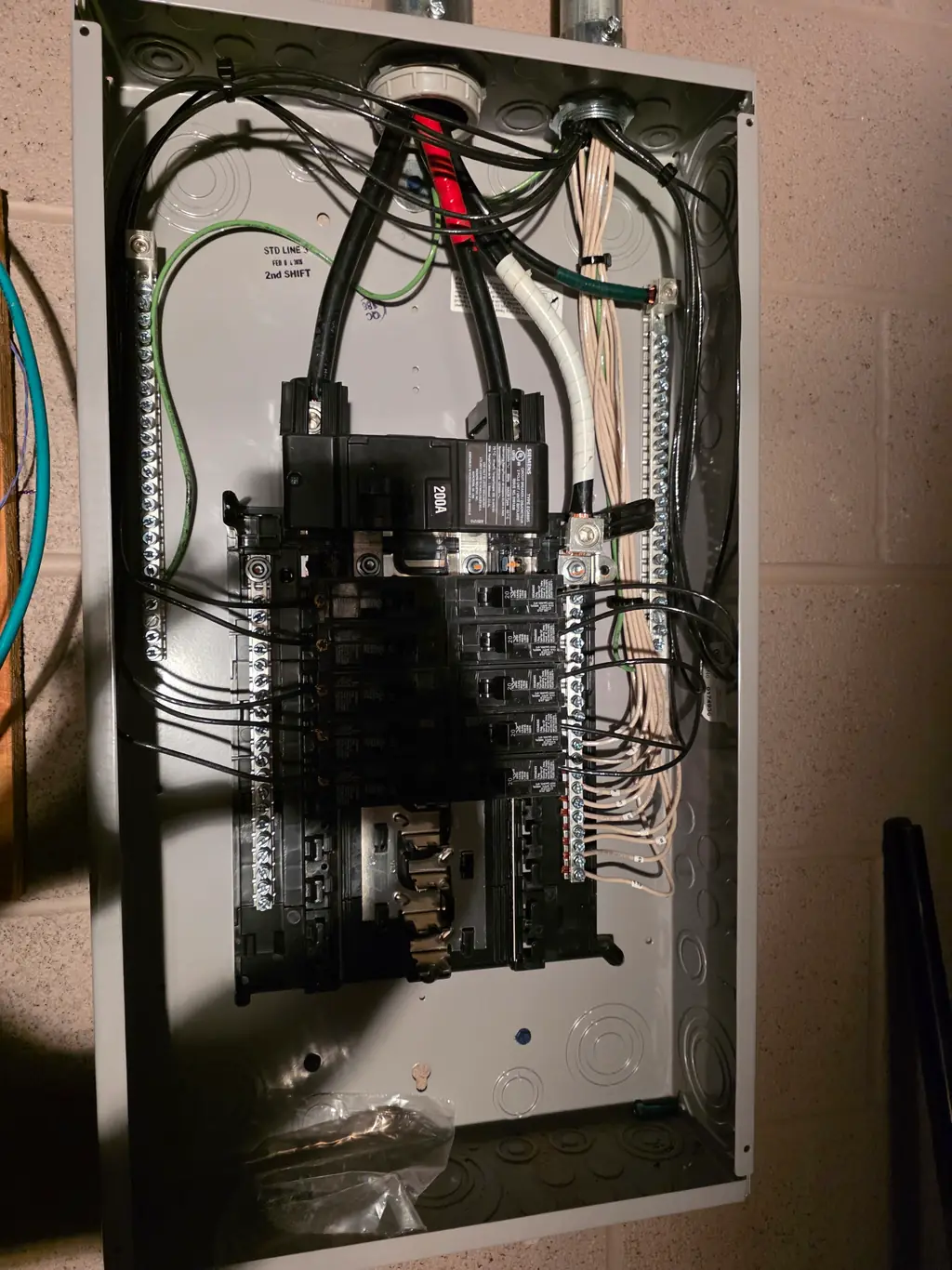
Handover is a checklist, not a handshake
The day a commercial job hands over is the day someone else's name goes on the building. A school superintendent, a warehouse operations manager, a store owner, whoever is signing for the space is trusting that every panel, every outlet, every piece of lighting behind the walls is going to do exactly what it is supposed to do for years without anyone thinking about it again. That trust does not come from a walkthrough where the lights turn on. It comes from testing, done and documented, before the walkthrough ever happens.
On a school or warehouse job, the person signing off usually is not an electrician themselves. They are relying on the contractor to have actually checked the work, not just installed it and hoped.
What actually gets tested
Before a commercial panel gets called finished, every circuit gets checked for continuity and proper insulation, connections get verified for a tight torque rather than just snug, and breaker sizing gets confirmed against the wire it is protecting. On a job with multiple panels, phase loads get balanced so one leg of the service is not carrying more than the others.
Labeling gets checked against the as-built drawings, not against what the original print said should be there. Construction changes what gets built, and a panel schedule that still reflects the original plan instead of what is actually in the wall is a liability waiting for the next person who opens that panel.
What happens when testing gets skipped
Skipping testing does not usually show up on day one. The lights come on, the outlets work, and everyone signs off believing the job is done. The problem surfaces later, sometimes months later, when a breaker that was never properly torqued starts to loosen from normal thermal cycling, or a mislabeled panel sends the wrong department scrambling during a routine repair because the schedule on the door does not match reality.
On an occupied building, that kind of surprise is expensive in ways that go beyond the electrical repair itself. A warehouse losing power to a section of racking during a shift, or a classroom going dark mid-day, costs the building owner more in disruption than the original testing would ever have cost to do properly.
New construction and occupied retrofits get handled differently
On new construction, from planning straight through to installation, testing happens in stages, often before the drywall goes up and hides everything behind it. That is the easier version, because the building is not in use yet and there is no schedule to work around besides the job's own.
Working inside a school or a warehouse that is still operating is a different problem. The work has to happen around the building's hours, existing circuits have to be verified as undisturbed once the new work ties in, and anywhere there is water or heavy foot traffic, ground fault protection gets tested specifically, not assumed to be working just because it is installed.
The paperwork is part of the handover, not an afterthought
A finished commercial job hands over more than a working building. It hands over the documentation that lets the next person, whether that is a facilities manager or another electrician five years from now, actually understand what is there.
- Panel schedules that match what is actually installed, not just the original design
- As-built markups showing anything that changed during construction
- Warranty terms in writing
- A direct contact for anything that comes up after move-in
It is the difference between a building that is easy to maintain and one where every future service call starts with someone tracing wires from scratch. A facilities manager who inherits a well-documented panel can plan a repair in minutes; one who inherits guesswork spends the first hour of every call figuring out what they are even looking at.
Commercial work, done since 1991
We have built out electrical systems for manufacturing plants, warehouses, retail stores and schools around Ardmore since 1991, licensed Oklahoma Contractor #029998, bondable and insured on every job. If you are inside Carter, Marshall, Love, Johnston or Murray County and you have a commercial project coming up, call 580-226-4041 and we will walk the space with you before anything gets priced.
Quality Electric Construction and Maintenance Corp. — (580) 226-4041
Call (580) 226-4041More articles
What Actually Happens During a Panel Upgrade
Before a single wire moves, an electrician has already worked out what your house actually needs. Here is what the job looks like from start to finish.
Why an Intermittent Electrical Problem Takes Time to Find
An intermittent fault hides by definition. Here is what troubleshooting actually looks like, and why the diagnosis is the part worth paying for.