Why an Intermittent Electrical Problem Takes Time to Find
An intermittent fault hides by definition. Here is what troubleshooting actually looks like, and why the diagnosis is the part worth paying for.
September 6, 2026 · 4 min read
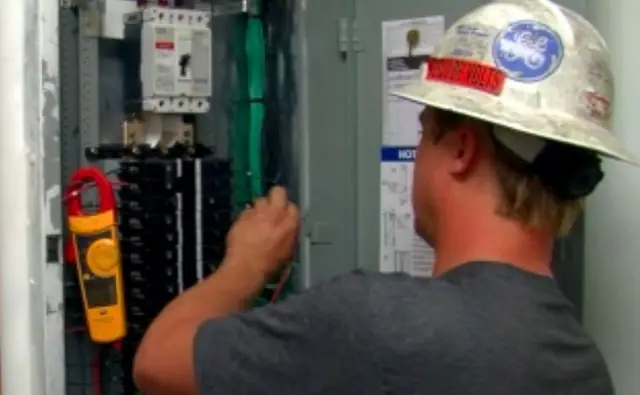
Why 'it only does it sometimes' is the hardest kind of call
The easiest electrical problem to fix is the one that is happening right now. Dead outlet, breaker tripped and staying tripped, light that will not come on at all: you can test it, find it, and fix it in the same visit. An intermittent fault is a different kind of job entirely, because by the time an electrician gets there, the problem has usually gone quiet again. It only acts up when the dryer is on a full load, or only on hot afternoons, or only when someone walks past a certain spot in the hallway.
That is not the electrician being difficult when they ask a lot of questions before touching anything. When does it happen. What is running at the same time. Has anything nearby been remodeled, or has a big appliance been added recently. Every answer narrows down a circuit that could otherwise be anywhere in the house.
Where the search actually starts
Troubleshooting starts at the panel, not the outlet that is acting up. A breaker that is warm to the touch, a connection that looks discolored, a wire that is slightly loose at the lug, all of those get checked first because a bad connection at the source shows up as a strange symptom everywhere downstream of it. From there it is a matter of testing along the circuit with a meter, checking voltage and continuity at each device, until the numbers stop matching what they should.
A clamp meter is usually the first tool out, because it can read current at a live connection without breaking the circuit open, which matters when the fault only shows itself under load. If a reading at the panel looks normal but a downstream outlet is acting up anyway, that tells the electrician the problem is further along the run, not at the source, and saves them from tearing into the wrong section of the house.
It is a process of elimination more than anything else. Isolate a section of the circuit, test it, rule it in or out, move to the next section. A loose neutral, a backstabbed connection that never fully seated, a wire nut that is twisted but not really gripping, any one of those can produce a fault that looks completely different depending on what is plugged in and running at the time.
Why heat and vibration are usually the real culprit
A loose connection has more resistance than a tight one, and resistance turns into heat under load. That is why a fault often only shows up when a circuit is working hard, like a dryer running a full cycle, and disappears once the load drops and the connection cools back down. It is not the electrician's imagination and it is not a coincidence. It is the same loose connection behaving differently depending on how much current is asking to pass through it.
Vibration adds to it over years. Appliances running, doors closing, even traffic on a road nearby, all of it can work a connection looser a little at a time, especially older push-in connections behind a switch or outlet that were never as secure as a properly torqued screw terminal to begin with.
The fix is usually smaller than the search
Once the actual fault is located, most of the time the repair itself is quick. A single bad connection re-terminated, a receptacle replaced, a wire nut redone properly. It is the finding that takes the time and the experience, not the fixing. That is really what you are paying for on a troubleshooting call: the diagnosis, not just the parts.
Every job carries a one year warranty on the work, and if it turns out the fault points to something bigger, like a section of old wiring or a panel that is simply worn out, you will hear that plainly before any further work starts, not after.
Why it is worth calling before the fault gets worse
A fault that only trips a breaker once in a while is easy to live with for months, and plenty of homeowners do. The trouble is that a loose or arcing connection does not stay the same size of problem. Heat cycling and vibration only make a bad connection worse over time, and a fault that started as an occasional nuisance can turn into a burned outlet, a damaged appliance cord, or worse. Calling it in while it is still intermittent is almost always cheaper and simpler than waiting for it to become constant.
Getting someone out
We have been troubleshooting homes and businesses around Ardmore since 1991, and we are available 24/7 for the calls that genuinely cannot wait until morning. If you are in Carter, Marshall, Love, Johnston or Murray County, call 580-226-4041 and describe what the circuit is doing. The more detail you can give about when it happens, the faster we can narrow it down once we are on site.
Quality Electric Construction and Maintenance Corp. — (580) 226-4041
Call (580) 226-4041More articles
What Actually Happens During a Panel Upgrade
Before a single wire moves, an electrician has already worked out what your house actually needs. Here is what the job looks like from start to finish.
What 'Tested and Inspected Before Handover' Actually Means
Handover day is not the finish line. It is the point where every circuit has to prove itself before anyone else touches the building.